






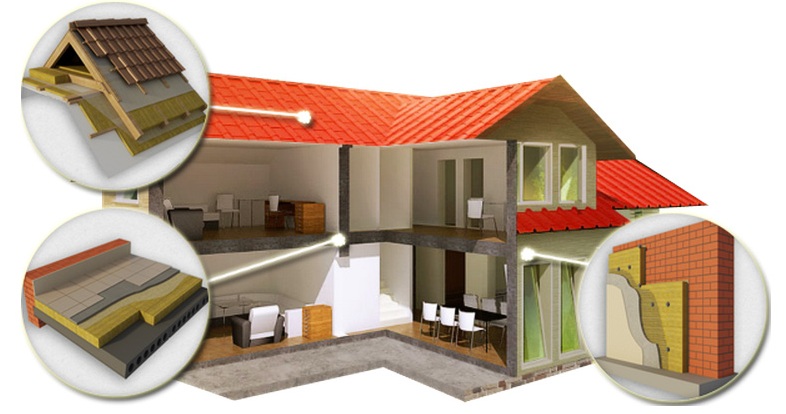
Insulating your home is an important step towards increasing energy efficiency and reducing heating costs. However, before starting such a project, it is important to understand what costs await you. In this article we will look at the main factors influencing the cost of insulating a house and try to provide guidelines for budget planning.
1. Why is it worth insulating your house?
Before delving into the cost details, it is worth noting why home insulation is so important:
- Savings on Heating and Cooling: A well-insulated home requires less energy to maintain a comfortable temperature.
- Increased comfort: Insulation helps maintain a stable room temperature and improves sound insulation.
- Environmental friendliness: Reduced energy consumption leads to reduced carbon dioxide emissions.
2. Main factors influencing the cost of insulation
The cost of insulating a home can vary greatly depending on several factors:
- Size of the house: The larger the area, the more materials will be required.
- Type of insulation: There are many types of insulation, each of which has its own advantages and price.
- Condition of the House: If the house requires preliminary renovation work, this will increase the overall cost of the project.
- Insulation method: Internal, external or inter-wall insulation may vary in price and labor intensity.
Region of residence: The cost of work and materials may vary depending on the region.
3. Types of insulation and their cost
Mineral wool
Average cost: $4–$6 per square meter.
Advantages: Good heat and sound insulation, fire resistance.
Disadvantages: Requires protection from moisture.
Foam plastic (expanded polystyrene)
Average cost: $3–$5 per square meter.
Advantages: Easy installation, good thermal insulation properties.
Disadvantages: Low fire resistance, release of harmful substances during combustion.
Extruded polystyrene foam (XPS)
Average cost: $5–$7 per square meter.
Advantages: High strength, excellent thermal insulation properties, moisture resistance.
Disadvantages: Higher price compared to conventional foam.
Polyurethane foam (foam)
Average cost: $7–$10 per square meter.
Advantages: High thermal insulation properties, possibility of application to complex surfaces.
Disadvantages: Requires special equipment for application, high cost.
Ecowool
Average cost: $5–$8 per square meter.
Advantages: Environmentally friendly, good heat and sound insulation.
Disadvantages: May be susceptible to moisture, requires professional installation.
4. Additional costs
When planning a budget for home insulation, it is important to take into account not only the cost of materials, but also additional costs:
- Work of specialists: Depending on the region and complexity of the work, the cost can vary from $10 to $30 per square meter.
- Prep work: Includes cleaning surfaces, repairing cracks and leveling walls, which can add $2-$5 per square foot.
- Waterproofing and Vapor Barriers: The necessary items to prevent moisture can cost between $1 and $3 per square foot.
5. Final cost of the project
For example, insulating a house of 150 square meters with mineral wool can be done as follows:
- Materials: $4 x 150 = $600
- Specialist work: $20 x 150 = $3000
- Additional charges: $5 x 150 = $750
- Total: $4350
Conclusion
Insulating your home is a worthwhile investment that pays off in savings on heating and cooling costs. It is important to carefully plan your budget and choose quality materials and professional performers. We hope this guide helps you better understand how much it costs to insulate your home and make an informed decision.